October 2026 update
After review of the latest round of community input, the Neighbourhood Bikeways Identification and Prioritization project is now complete. Using a clear framework, the project has determined where neighbourhood bikeways should be located within Saanich’s long-term cycling network and identified several priority routes for implementation.
The What We Heard report from spring 2026 engagement can be found here, and the finalized build-out plan (Years 1-5) can be found here.
This fall, Saanich will begin design and installation work on several Year 1 neighbourhood bikeway projects. Project pages for each route can be found below, and this list will be updated as more information becomes available
- Hampton Road: from Tillicum Road to Harriet Road
- Douglas Connector: between McKenzie Avenue and the Lochside Regional Trail entrance at Municipal Hall
- Dean Avenue: including part of Haultain Street and Trent Street
- Seaton Street: Rowland Avenue to the Galloping Goose Trail
- San Juan Avenue: between Gordon Head Road and Braefoot Avenue via the San Juan Greenway urban trail
We invite you to follow each project on HelloSaanich for the latest updates, including progress on construction, project features, and ways to stay informed.

Neighbourhood Bikeways
Neighbourhood bikeways are streets with low traffic and speed where people cycling and driving can safely share the road together. They play an important role in Saanich’s active transportation network by providing safe cycling connections located away from busy roads.
Neighbourhood Bikeways might include:
- Signs and pavement markings
- Speed humps, traffic circles, or diverters
- Other features to make cycling more comfortable for all ages and abilities
Examples of Neighbourhood Bikeways in Saanich
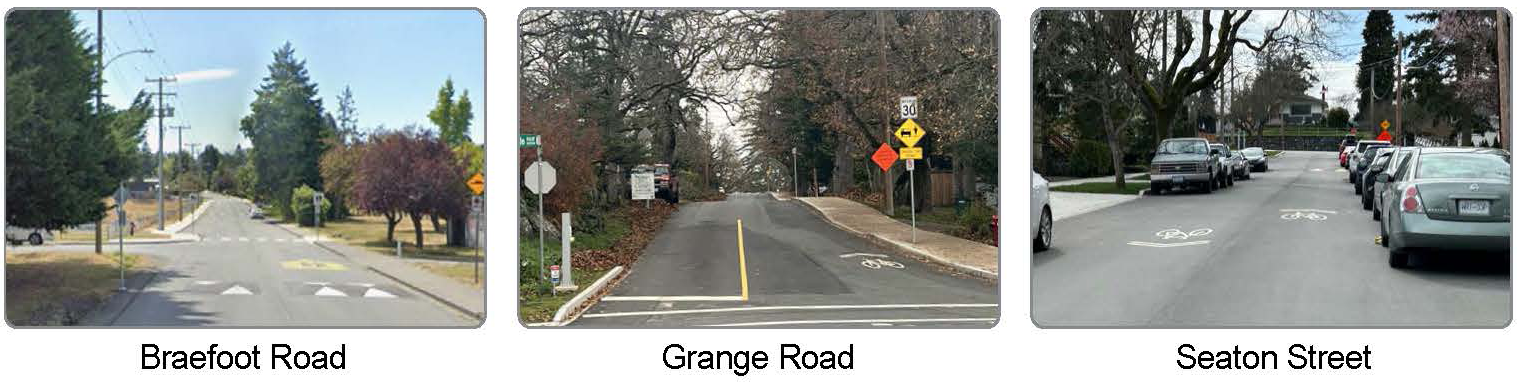
With lower vehicle speeds and volumes, they are attractive routes for cyclists of all ages and abilities and help fill in gaps between other cycling facilities. Neighbourhood bikeways can also support other community benefits such as traffic calming, slower speeds, improved wayfinding, and allow for greater retention of road widths and parking than other types of facilities.
- To see a map of the neighbourhood bikeways taking shape in Saanich over the next five years: Years 1 to 5 build-out plan [PDF - 4 MB]
- To see the analysis of engagement and selection criteria: Project Result [PDF - 3 MB]
Neighbourhood bikeways align with the long-term direction of Saanich’s Active Transportation Plan, Official Community Plan, Road Safety Action Plan, and Council’s Strategic Plan to build a safer, low-carbon community.
In other communities, neighbourhood bikeways can go by other names such as greenways, bicycle boulevards, slow streets, bicycle priority streets, or local street bikeways.

Identifying and prioritizing future Neighbourhood Bikeways
Through the Neighbourhood Bikeways Identification and Prioritization project, Saanich residents provided feedback about how the District should decide which routes in the planned bicycle network are made neighbourhood bikeways, as well as which bikeways in the network should be built first.
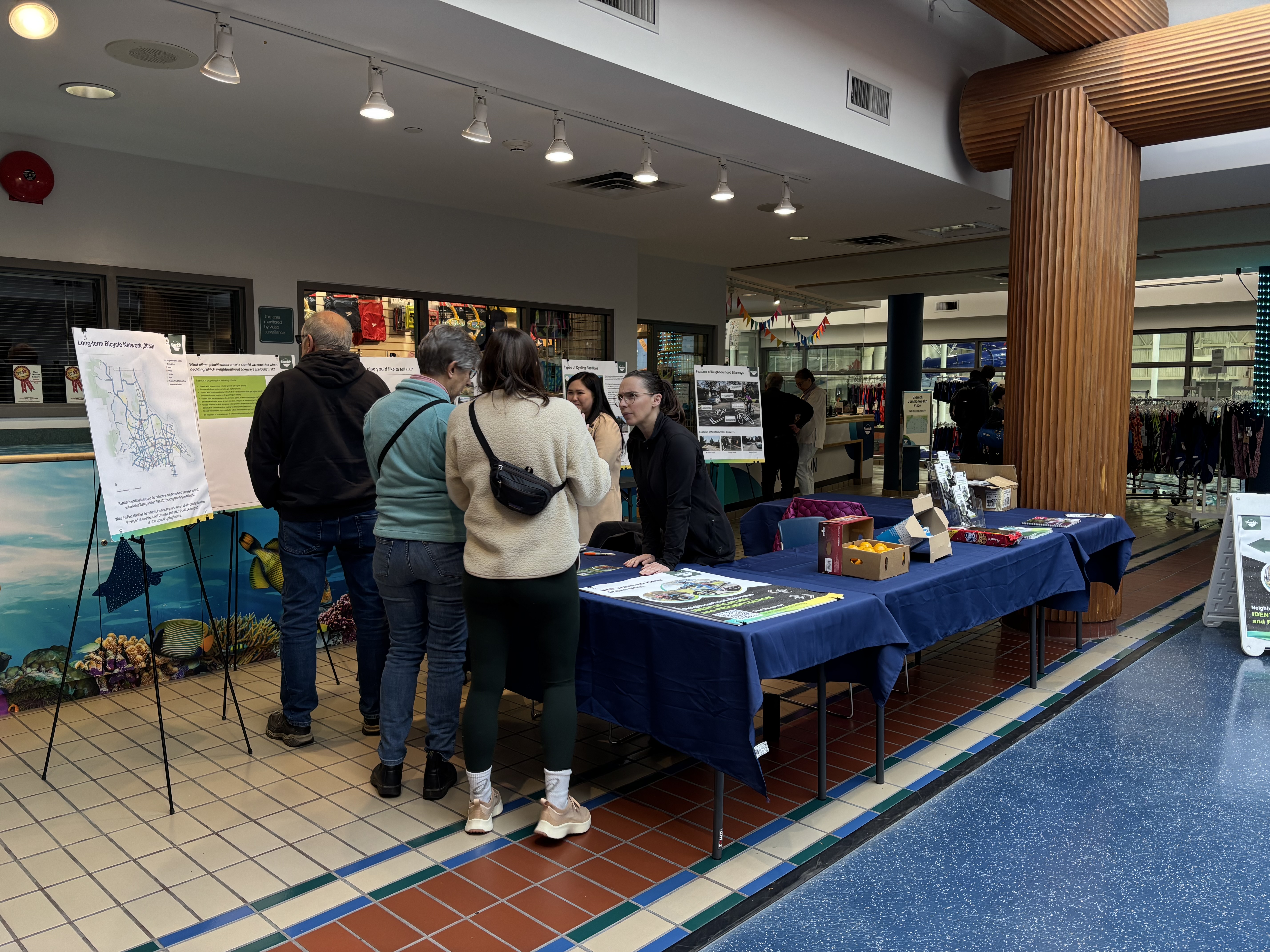
Community engagement took place in two rounds, fall 2025 and spring 2026, and included multiple surveys, community pop-up events, advisory committee presentations, meetings with interested parties, and emails from residents and community associations.Spring 2026 What We Heard Report
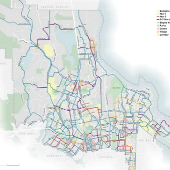
Throughout public engagement, we heard that connections to other cycling facilities and popular destinations were important factors or planning neighbourhood bikeways. The project team determined that minor additions to the long-term bike network in the Active Transportation Plan would improve legibility and connectedness of the network. These additions are shown on this map.
Based on public feedback, while also drawing on professional expertise, technical analysis and best practices, Saanich developed the following criteria to select and prioritize future neighbourhood bikeway routes:
Which bicycle routes should be built as neighbourhood bikeways?
- Width of the travel space
- Speed of motor vehicles
- Number of motor vehicles using the road
- Absence of yellow centre line
- Level of transit service provided along the route
-
Other type of cycling facility not feasible
Which neighbourhood bikeways should be prioritized for implementation?
- Speed of motor vehicles
- Number of motor vehicles using the road
- Timeframe identified in the Active Transportation Plan
- Road Safety Action Plan priorities for safety improvements
- Number of connections to other facilities
- Existing cycling volumes
- Proximity to sensitive land uses (for example: schools, community centres, seniors’ facilities)
- Proximity to desired destinations (for example: schools, community centres, parks, shopping)
- Proximity to dense land uses (ie. Centres, Corridors and Villages in the Official Community Plan)
- Lack of an existing parallel route in the area
- Constructability and coordination with other projects
- Distribution of projects throughout Saanich
Neighbourhood Bikeway Projects
.png)
.png)
.png)
.png)
.png)