
Saanich is a Vision Zero community. We are working to eliminate traffic-related deaths and serious injuries on our roads. Traffic calming plays a key role in achieving this.

What is Traffic Calming?
Traffic calming refers to the range of measures used to reinforce appropriate driver behaviour and support the creation of safer streets. Traffic calming is commonly thought of as physical infrastructure designed to reduce vehicle speeds, reduce traffic volumes, and address short-cutting through neighbourhood streets. It may also include communications, enforcement and other non-infrastructure strategies.
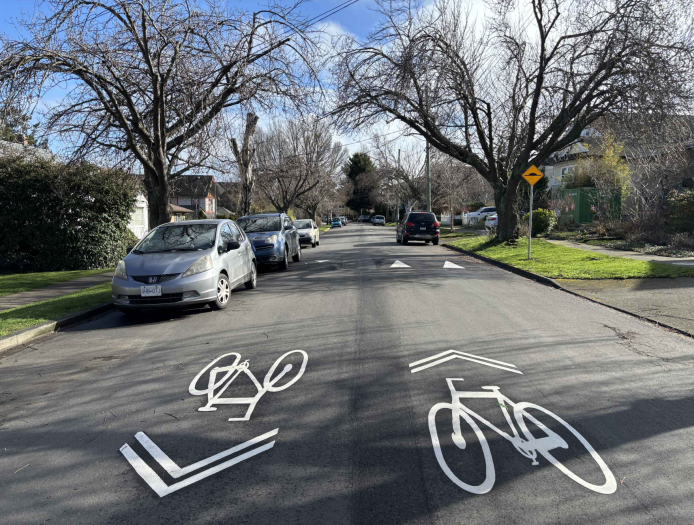
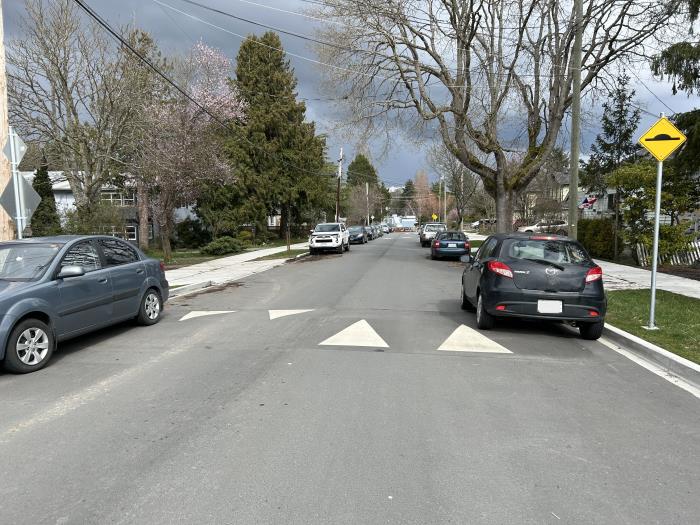
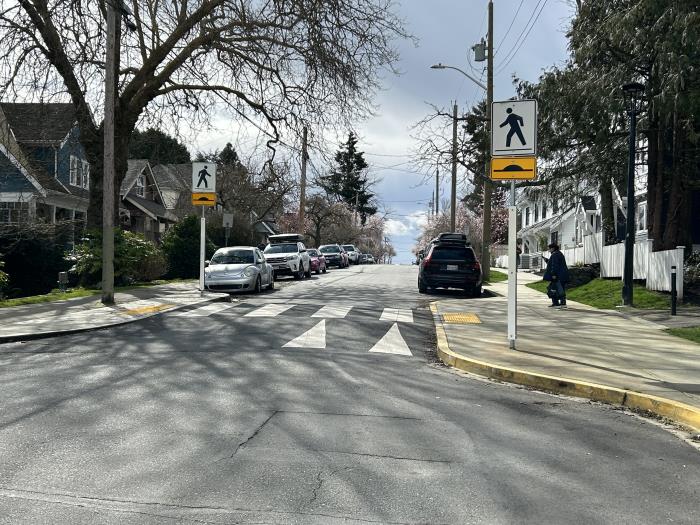
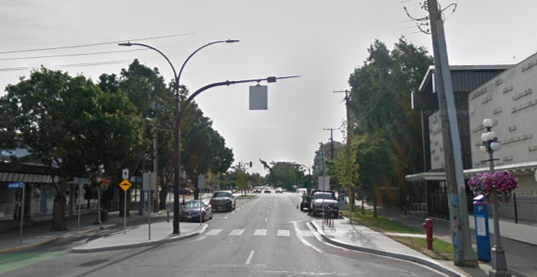
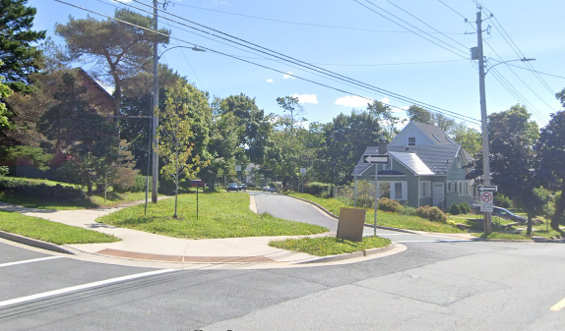
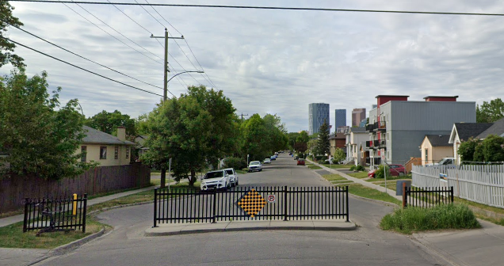
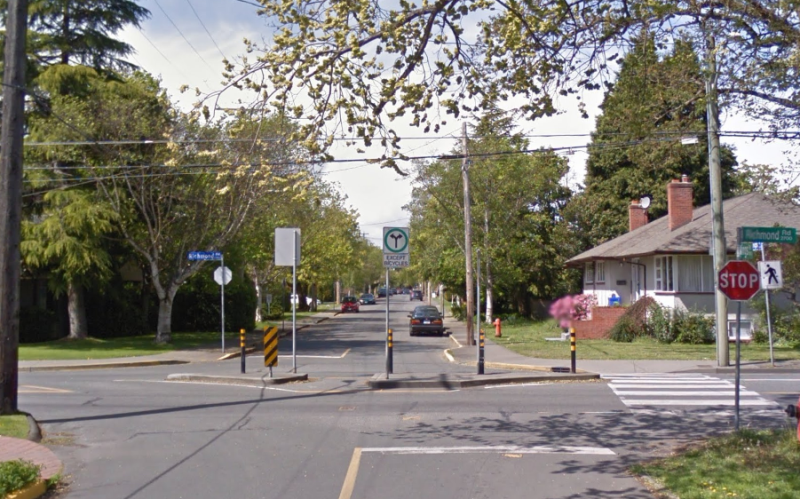
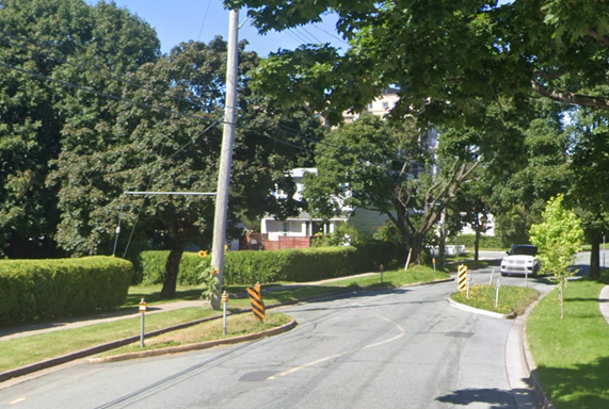
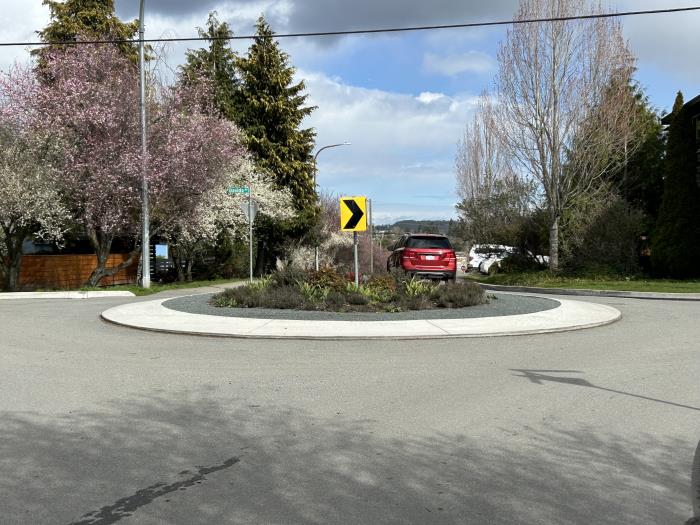
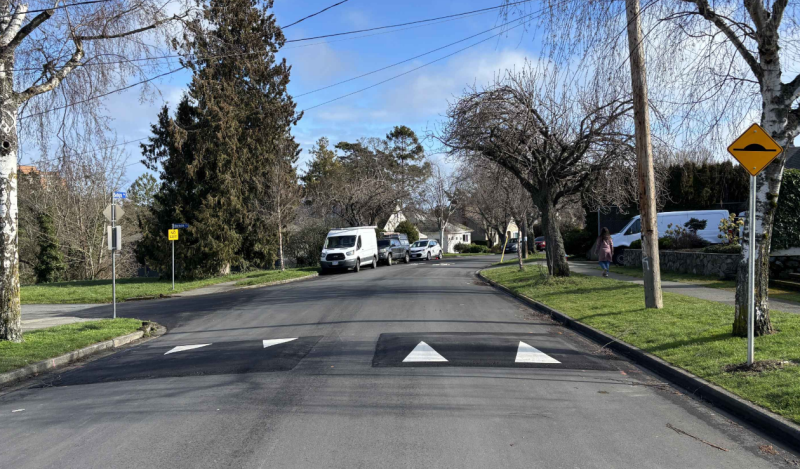
Common examples of traffic calming measures are speed humps, curb extensions, chicanes, and traffic circles (see images below).
Goals of Traffic Calming
- Improve livability in neighbourhoods
- Increase active transportation
- Improve safety and the perception of safety for people travelling by all modes
- Align driver behaviour with surrounding land uses
- Plan and implement fiscally prudent infrastructure
Traffic Calming Policy
In 2022, Council directed staff to develop this new policy to take a consistent, transparent approach to making neighbourhood streets safer and more livable. On August 18, 2025, Saanich Council adopted the Traffic Calming Policy, which sets out a clear process for selecting and prioritizing traffic calming projects in Saanich. The policy also supports both the Road Safety Action Plan and the Active Transportation Plan.
Staff will implement new projects based on available funding. Timing for any future implementation is determined through the District’s annual budgeting process
How does the policy work?
The Traffic Calming Policy sets out a clear process for selecting, prioritizing, and building projects of two types:
1. Types of projects
- Residential Roads and Neighbourhood Bikeways: Traffic calming on local streets inside the Urban Containment Boundary or on roads to be designed as neighbourhood bikeways.
- Special Project Areas: Larger or more complex projects e.g., calming measures across several streets or on collector/major roads.
- Click here for illustrations of the types of projects.
2. How projects are identified
- Public requests or concerns from residents
- Data collection and safety reviews
- Coordination with other projects or plans
3. Screening and prioritization
For residential streets and streets to be designed as a Neighbourhood Bikeway, we screen suggestions to decide if traffic calming is needed (e.g. high speeds, lots of traffic, history of serious crashes). Projects that meet the thresholds go on a master list. Projects in Special Project Areas are added directly to the list for consideration.
Projects are then prioritized based on factors like safety, proximity to schools and parks, lack of sidewalks or bike lanes, and crash data.